Table of Contents
Solar Lighting vs Grid-Tied LED: The Real Cost Picture
When data center operators compare solar lighting vs grid-tied LED for campus applications, the default assumption is that grid-tied costs less. A commercial LED fixture runs a few hundred dollars. A complete solar system like the Senti costs more per unit.
But the fixture is roughly 10% of the installed cost. The other 90% is in the ground. When you run a full total-cost-of-ownership analysis of solar lighting vs grid-tied alternatives, the math tells a very different story.
Capital Costs: Why Solar Lighting vs Grid-Tied Isn’t Just About Fixtures
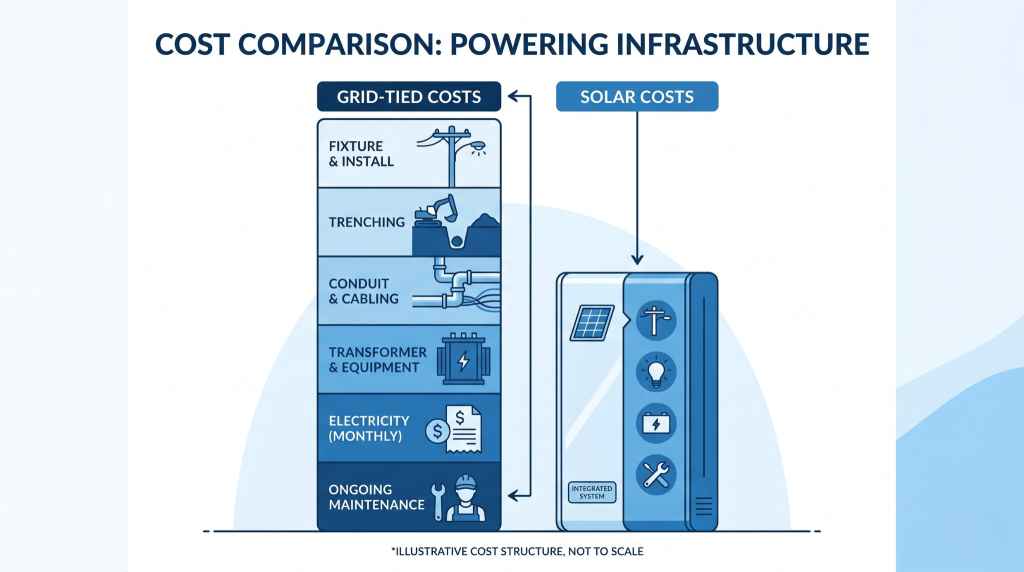
The solar lighting vs grid-tied capital cost comparison must include everything that goes into the ground and the walls:
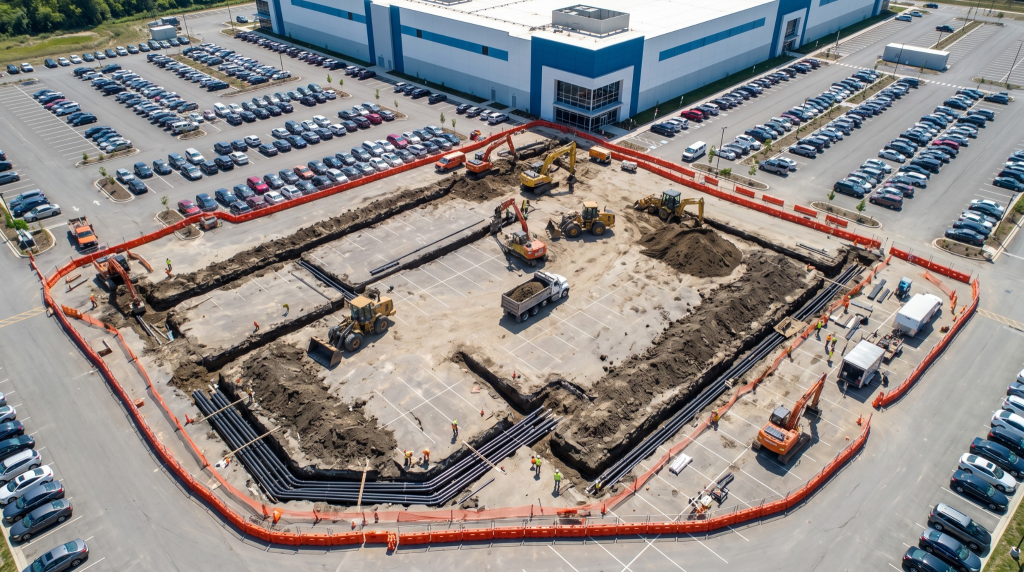
- Trenching and conduit: $15-50+ per linear foot depending on terrain. On a large campus spanning thousands of feet, this alone can dwarf fixture costs.
- Electrical infrastructure: Transformers, distribution panels, circuit breakers, disconnect switches, wiring.
- Design and engineering: Full electrical site plan, load calculations, voltage drop analysis.
- Permitting and inspection: Electrical permits and code compliance in every jurisdiction.
Solar lighting eliminates nearly all of these. Each fixture is self-contained. No trenching, no conduit, no electrical engineering. Installation is setting a pole and mounting the unit. According to the RSMeans construction cost database, underground electrical infrastructure routinely represents 60-80% of total exterior lighting installation cost.
Operating Costs: The 15-Year Solar Lighting vs Grid-Tied Comparison
Over a 15-year facility life, the solar lighting vs grid-tied operating cost gap widens significantly:
Electricity: Grid-tied lighting consumes utility power that is metered and billed at rates that rise every year. Solar lighting has zero electricity cost for the life of the system.
Maintenance: Grid-tied systems experience underground faults, corroded connections, and tripped breakers requiring licensed electricians. Solar systems need periodic cleaning and eventual battery replacement, but no specialized electrical skills.
Monitoring: Traditional lighting is unmonitored. Cloud-managed solar systems provide real-time visibility into every fixture. See our piece on how remote monitoring transforms economics.
Hidden Soft Costs in the Solar Lighting vs Grid-Tied Decision
Schedule impact: Electrical infrastructure for exterior lighting depends on other systems being complete. Solar installs at any point in construction.
Grid capacity opportunity cost: Every kW allocated to exterior lighting is a kW unavailable for IT equipment. In markets with constrained grid connections, this opportunity cost is significant.
Campus flexibility: Off-grid solar fixtures relocate in hours. Grid-tied lighting requires excavation and electrical rework.
The Energy as a Service Alternative
For operators who prefer zero CapEx, the Energy as a Service model converts the solar lighting vs grid-tied decision into a simple monthly fee. The provider owns, installs, monitors, and maintains everything. Learn more in our dedicated piece on EaaS for data center lighting.
When trenching, infrastructure, engineering, permitting, electricity, maintenance, and grid opportunity cost are all factored in, smart off-grid solar lighting is the lower-cost option for most data center campus applications. See real deployments across six continents.
Running the Numbers: Solar Lighting vs Grid-Tied on a Real Campus
A simplified example illustrates the solar lighting vs grid-tied dynamics. Consider a 100-fixture data center campus installation. Grid-tied LED fixtures installed with trenching, conduit, electrical infrastructure, engineering, and permitting typically range from $3,000 to $8,000 or more per fixture on a fully loaded basis, depending on site conditions and distance from the electrical source. Over 15 years, add electricity costs that escalate annually and unpredictable maintenance expenses.
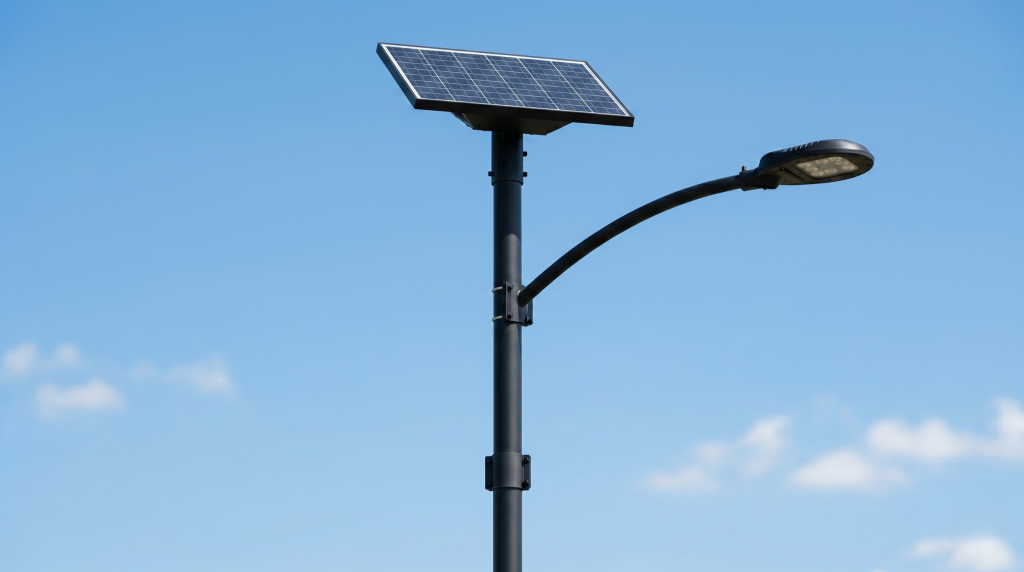
Off-grid solar lighting systems carry a higher per-unit acquisition cost but near-zero installation cost beyond the pole and foundation. No trenching. No conduit. No electrical engineering fees. Zero electricity cost for the life of the system. Battery replacement at the midpoint is the primary ongoing expense. When all costs are totaled across the full asset life, the solar lighting vs grid-tied comparison favors solar on most large campuses, especially when the opportunity cost of grid capacity is factored in.
Clear Blue Technologies (TSXV: CBLU) delivers clean, managed, wireless power for mission-critical infrastructure worldwide. Learn more at clearbluetechnologies.com.


